
HPS grow lights are High-Pressure Sodium fixtures that generate intense heat and consume more energy, while LED grow lights use semiconductor technology to produce targeted light spectrums with minimal heat output. LED grow lights are essential tools for winter greenhouse production because they typically consume 40-60% less energy than HPS systems, last over 50,000 hours compared to HPS’s 24,000 hours, and provide customizable light spectrums essential for different growth stages during limited daylight months.
What Are HPS Grow Lights and How They Function
HPS grow lights are High-Pressure Sodium lighting systems that work by passing electrical current through a mixture of sodium and mercury vapor inside a pressurized glass tube. This process creates an intense orange-yellow light spectrum that plants readily absorb for photosynthesis. HPS systems typically operate at temperatures between 2000K-2200K, producing significant heat as a byproduct of their operation. These fixtures have been the standard for greenhouse cultivation for decades because they deliver consistent, powerful illumination that penetrates deep into plant canopies.
Understanding HPS Light Technology and Components
HPS grow light systems consist of several key components that work together to produce reliable illumination. The ballast regulates electrical current to the lamp, while the reflector directs light downward toward plants. Most HPS fixtures require a warm-up period of several minutes to reach full brightness, and they cannot be immediately restarted if turned off. The sodium vapor inside creates the characteristic amber glow that effectively supports flowering and fruiting phases in plants. These systems typically range from 150 watts for small applications to 1000 watts for commercial greenhouse operations.
What Are LED Grow Lights and Their Technology
LED grow lights are Light-Emitting Diode systems that use semiconductor technology to convert electricity directly into specific wavelengths of light. Unlike HPS systems, LEDs work by passing electrical current through semiconductor materials, which emit photons without generating significant heat. This technology allows manufacturers to create targeted light spectrums by combining different colored diodes, typically including blue wavelengths for vegetative growth and red wavelengths for flowering. LED fixtures can be customized to include full-spectrum white light or specific color combinations optimized for different crop types and growth stages.
LED Technology Components and Spectrum Control
LED grow lights feature sophisticated driver circuits that regulate power to individual diodes, enabling precise control over light intensity and spectrum. Many modern LED systems include programmable controllers that allow growers to adjust light recipes throughout the day or growing season. The absence of fragile filaments or gas-filled tubes makes LEDs more durable and resistant to vibration and temperature fluctuations. Quality LED fixtures incorporate thermal management systems with heat sinks and fans to maintain optimal operating temperatures, ensuring the 50,000+ hour lifespan that distinguishes them from traditional lighting technologies.
Key Benefits of HPS Grow Lights for Winter Production
HPS grow lights provide several advantages that make them valuable for winter greenhouse cultivation. Their intense light output, typically producing 130-150 lumens per watt, penetrates effectively through dense plant foliage and reaches lower leaves that might otherwise receive insufficient illumination. The heat generated by HPS systems, while requiring management, can actually benefit cold-climate greenhouses by reducing heating costs during winter months. These fixtures excel at supporting flowering and fruiting phases because their orange-red spectrum closely matches wavelengths that trigger reproductive responses in many plant species.
HPS Light Advantages for Large-Scale Operations
Commercial greenhouse operations often favor HPS systems because they provide consistent, uniform light distribution across large growing areas. The proven track record of HPS technology means that replacement parts, ballasts, and bulbs are readily available from multiple suppliers. Installation costs for HPS systems are typically lower than LED alternatives, with basic 400-600 watt fixtures ranging from $100-300 compared to equivalent LED systems that may cost $400-800. For growers with established HPS infrastructure, performance analysis shows reliable results when properly maintained and operated within recommended parameters.
What Are the Limitations of HPS Grow Lights
HPS grow lights have several significant limitations that impact their efficiency in modern greenhouse operations. Energy consumption represents the primary drawback, with HPS systems typically using 400-1000 watts while converting only about 30% of that energy into usable light. The remaining 70% becomes heat, requiring additional ventilation and cooling systems that increase operational costs. Frequent bulb replacements add ongoing expenses, as HPS lamps gradually lose intensity over their 24,000-hour lifespan and should be replaced annually for optimal performance.
Heat Management Challenges with HPS Systems
Heat generation from HPS grow lights creates complex climate control challenges in greenhouse environments. Surface temperatures of HPS bulbs can exceed 500°F, requiring adequate clearance from plants to prevent heat stress and leaf burn. This excess heat can raise ambient greenhouse temperatures by 10-15°F, forcing growers to increase ventilation rates and potentially run cooling systems even during winter months. The heat also accelerates water evaporation from growing media, increasing irrigation requirements and potentially stressing plants if moisture levels fluctuate significantly.
Key Numerical Insights on Lighting Technologies
- HPS lights typically last around 24,000 hours of operation
- LED lights can last over 50,000 hours under normal conditions
- HPS fixtures use about 400-1000 watts depending on size
- LED grow lights often run at 200-600 watts for equivalent coverage
- HPS systems produce about 130-150 lumens per watt
- LED lights can yield around 150-200 lumens per watt
- HPS fixtures typically cost 40-60% more to operate annually
What Are the Benefits of LED Grow Lights for Winter
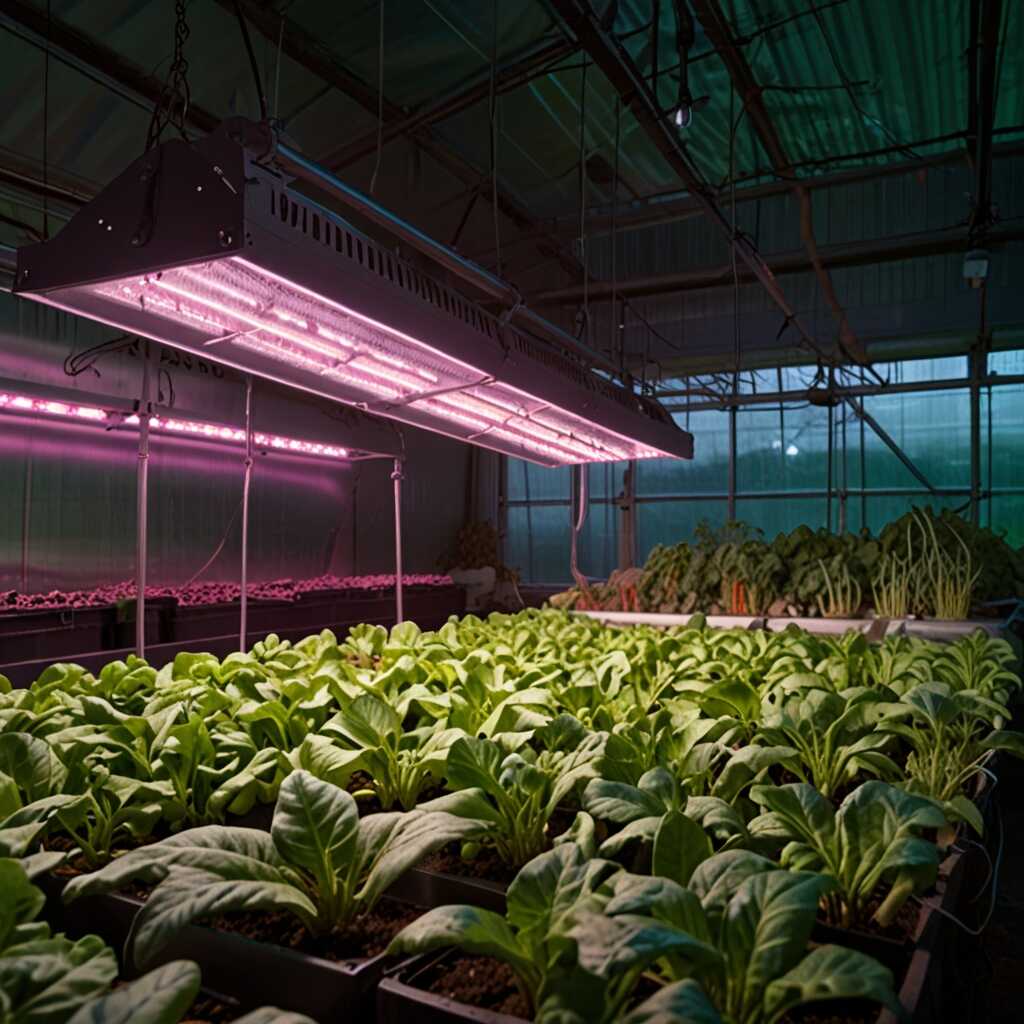
LED grow lights offer compelling advantages that make them increasingly popular for winter greenhouse production. Energy efficiency tops the list of benefits, with quality LED systems consuming 40-60% less electricity than equivalent HPS fixtures while providing similar or superior plant growth results. The extended lifespan of LEDs, often exceeding 50,000 hours of operation, reduces replacement costs and maintenance labor. LED systems generate minimal heat, allowing closer placement to plants and reducing cooling requirements, which is particularly valuable during winter when energy costs for climate control are highest.
LED Spectrum Customization for Optimal Plant Growth
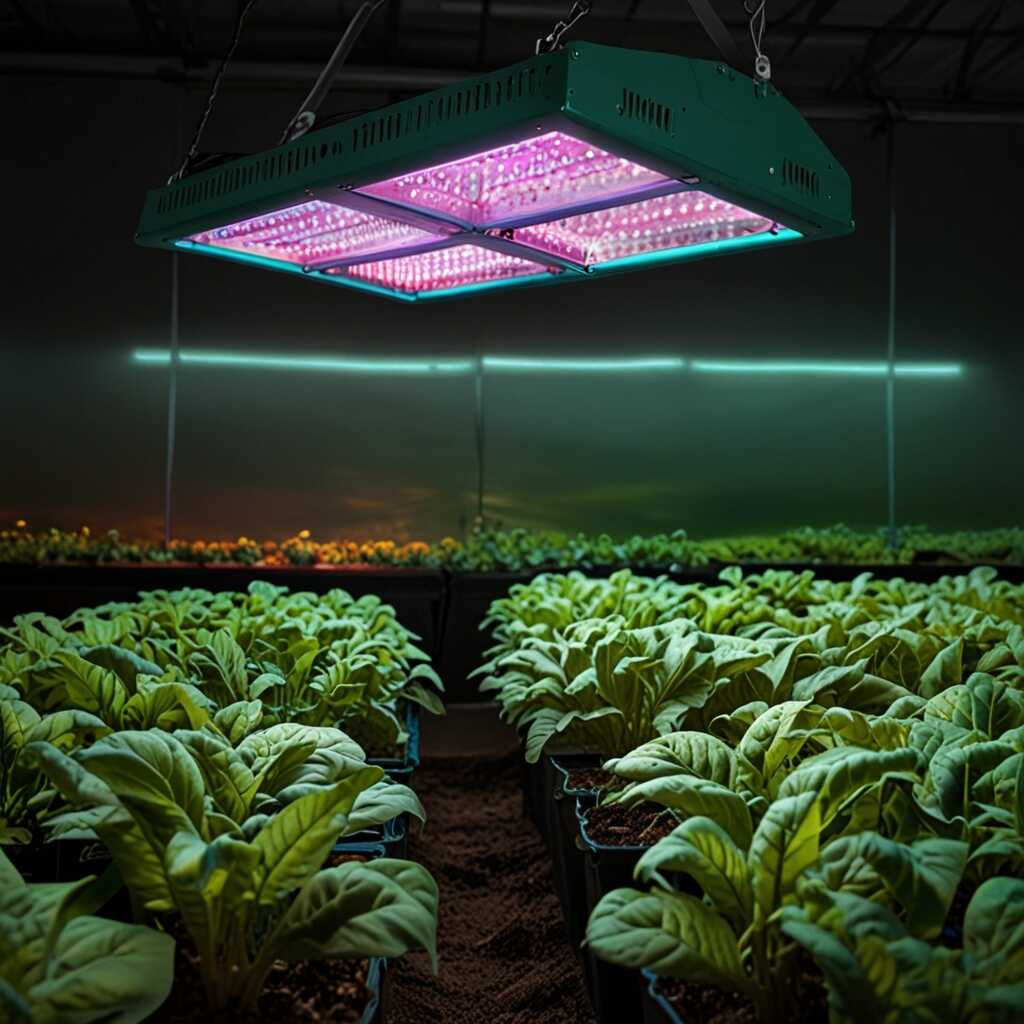
LED technology enables precise spectrum control that can be optimized for specific crops and growth stages. Full-spectrum LED fixtures typically include blue wavelengths (400-500nm) for compact vegetative growth, red wavelengths (600-700nm) for flowering stimulation, and white light components that support overall photosynthesis. Many advanced LED systems allow growers to adjust spectrum ratios throughout the growing season, providing blue-heavy spectrums during propagation and red-enhanced spectrums during flowering. LED grow lights and HPS lights differ significantly in their ability to provide this level of spectral customization.
What Are the Limitations of LED Grow Lights
LED grow lights have limitations that growers must consider when planning winter production systems. Initial purchase costs remain significantly higher than HPS alternatives, with quality full-spectrum LED fixtures typically costing $300-800 compared to $100-300 for equivalent HPS systems. This higher upfront investment can strain budgets for small-scale operations or hobby growers. Some LED systems may not provide sufficient light intensity for large, mature plants or deep canopy penetration without using multiple fixtures or higher-wattage units.
LED Performance Considerations for Different Crop Types
Certain crops may respond differently under LED illumination compared to traditional HPS lighting. Plants adapted to high-intensity light, such as tomatoes and peppers, sometimes require higher LED wattages or additional fixtures to achieve optimal growth rates. The lower heat output of LEDs, while generally beneficial, may necessitate supplemental heating in cold greenhouses where HPS heat previously contributed to climate control. Full-spectrum LED grow lights designed for winter cultivation must be carefully selected to ensure adequate photosynthetic photon flux density (PPFD) reaches all plant levels.
Advantages of Different Types of Grow Lighting
- HPS lights provide intense light penetration for tall plants and dense canopies
- LED lights consume 40-60% less energy and generate minimal heat
- HPS systems have lower initial costs and established supplier networks
- LED options produce customizable spectrums for different growth stages
- HPS lights may require bulb replacement every 12-18 months
- LED technology offers programmable light schedules and intensity control
- LEDs have smaller environmental footprints over their extended lifespans
How Much Do HPS and LED Grow Lights Cost to Operate
Operating costs differ significantly between HPS and LED grow light systems, with energy consumption representing the largest ongoing expense. A typical 600-watt HPS system running 12 hours daily costs approximately $25-35 per month in electricity at average rates of $0.12 per kWh. An equivalent LED system drawing 300-400 watts would cost $15-20 monthly under the same conditions. LED grow lights deliver more lumen output per watt consumed, making them more cost-effective for continuous operation during winter months when supplemental lighting runs longer hours.
Long-Term Financial Analysis of LED vs HPS Investment
Long-term cost analysis reveals substantial savings potential with LED systems despite higher initial investment. Over a five-year period, a greenhouse using LED fixtures typically saves $200-400 per fixture in energy costs compared to equivalent HPS systems. Reduced replacement costs add to savings, as LEDs may not require bulb changes during this timeframe while HPS systems need 2-3 bulb replacements at $30-50 each. LED grow lights are substantial due to their efficiency advantages and reduced maintenance requirements, often providing payback periods of 18-36 months depending on usage hours and local electricity rates.
How Does Light Spectrum Affect Winter Plant Growth
Light spectrum plays a crucial role in plant development during winter months when natural sunlight is limited in both intensity and duration. Different wavelengths trigger specific plant responses, with blue light (400-500nm) promoting compact vegetative growth and strong root development, while red light (600-700nm) stimulates flowering, fruiting, and stem elongation. Winter conditions require balanced spectrum provision because plants cannot rely on changing seasonal light quality to regulate their growth cycles. Green and yellow wavelengths, while less efficiently absorbed, contribute to overall photosynthesis and help light penetrate deeper into plant canopies.
Optimizing Light Spectrum for Different Winter Crops
Different crops require specific spectral approaches for optimal winter production results. Leafy greens like lettuce and spinach thrive under blue-heavy spectrums with ratios of 60% blue to 40% red light, promoting compact growth and preventing stretching. Fruiting crops such as tomatoes and peppers benefit from balanced spectrums with approximately 30% blue, 50% red, and 20% white light to support both vegetative growth and fruit development. LED grow lights can deliver the precise spectral control needed for these applications, while HPS systems provide broad-spectrum output that works well for most crops but cannot be customized.
Target Audiences for Effective Lighting Solutions
- Commercial growers benefit from energy-efficient systems that reduce operational costs
- Hobby gardeners prefer user-friendly fixtures for small-scale indoor cultivation
- Indoor farming operations require scalable lighting with consistent performance
- Environmentally conscious growers choose LED systems for sustainability benefits
- Vegetable farmers need reliable lighting systems for year-round production
- Research facilities favor programmable LED systems for controlled growing conditions
- Educational institutions benefit from safe, efficient lighting for teaching applications
Real-World Performance Comparisons of HPS vs LED Systems
Field studies comparing HPS and LED performance in winter greenhouse conditions reveal significant differences in crop outcomes and operational efficiency. Research conducted at university extension facilities shows that lettuce and herbs grown under LED systems typically achieve 15-25% faster growth rates compared to HPS-lit crops, while consuming 45% less energy. Tomato and pepper production studies indicate that while HPS systems may produce slightly higher yields due to increased heat and light intensity, HPS and LED grow lights in winter demonstrate comparable results when LED systems are properly designed for high-light crops.
Crop-Specific Performance Results Under Different Lighting
Detailed crop performance data reveals how different plants respond to HPS versus LED illumination during winter months. Leafy greens consistently show superior results under LED lighting, with spinach demonstrating 20% higher vitamin content and lettuce showing more uniform head formation. Fruiting crops exhibit more variable responses, with cucumber and tomato plants showing better fruit set under HPS heat, while peppers and eggplants perform equally well under either technology when light intensity reaches 400-600 PPFD. Herb production favors LED systems, with basil and cilantro showing enhanced oil production and more compact growth habits under targeted spectrum LED fixtures.
How to Choose Between HPS and LED for Your Winter Greenhouse
Selecting the appropriate grow light technology for winter greenhouse production requires evaluating several key factors including crop types, facility size, energy costs, and budget constraints. Growers focusing on leafy greens, herbs, or propagation typically achieve better results with LED systems due to their spectrum control and energy efficiency. Large commercial operations growing heat-loving crops like tomatoes may benefit from HPS systems, especially in cold climates where the additional heat reduces heating costs. LED grow lights provide customizable light spectra and long-term cost savings that make them ideal for most modern greenhouse applications.
Decision Matrix for HPS vs LED Selection
Creating a decision framework helps growers choose the most appropriate lighting technology for their specific situation. Consider LED systems when energy efficiency is prioritized, when growing light-sensitive crops, or when precise spectrum control benefits production goals. Choose HPS systems when initial budget is limited, when growing traditional greenhouse crops that benefit from additional heat, or when existing electrical infrastructure favors high-wattage lighting. Testing methodology shows reliable results from both technologies when properly matched to crop requirements and environmental conditions, making informed selection based on specific growing objectives the key to success.