
NPK Ratio represents the percentage of Nitrogen, Phosphorus, and Potassium provided by a hydroponic nutrient solution. The specific ratio you require depends entirely on the growth stage of your plants and the specific crop species you intend to cultivate.
Which NPK Ratio suits your specific situation?
| If this is you | The NPK Ratio that suits you | Why |
|---|---|---|
| You are starting new seeds or cuttings | Low Nitrogen, High Phosphorus (e.g., 1-3-2) | High phosphorus supports root development and initial establishment without forcing excessive leaf growth too early. |
| You are managing leafy greens like lettuce or spinach | High Nitrogen (e.g., 3-1-2) | Nitrogen is the primary driver for vegetative biomass and foliage production in non-fruiting crops. |
| You are growing fruiting crops like tomatoes or peppers | Balanced or High Potassium (e.g., 2-2-3) | Potassium regulates water movement and sugar transport, which are essential for fruit size and quality. |
| You are in the late flowering stage of a crop | Low Nitrogen, High Potassium (e.g., 1-1-3) | Reducing nitrogen prevents “stretch” and redirects energy toward flower production and resin development. |
| You are maintaining a general-purpose hydroponic system | Balanced NPK (e.g., 2-2-2) | A balanced ratio provides a baseline of all three primary nutrients for steady, multi-purpose growth. |
Where these choices show up in our reviews
3 reviewed options, $158.20 to $280, with the full write-up behind each name.


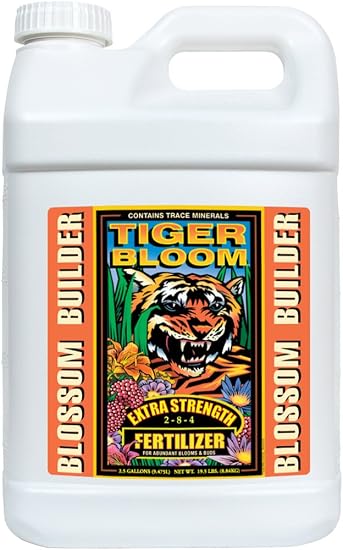
FoxFarm FX14021 Hydroponic Fertilizer
$158.20 price checked August 2026
Read our full FoxFarm FX14021 review
Understanding your specific needs is easier when you learn about the concentration rate for hydroponic nutrients.
How do I measure or establish my required NPK value?
You can establish your required NPK value by identifying the specific mineral requirements of your chosen crop at its current growth stage.
Identifying crop-specific requirements
Most commercial hydroponic guides provide a target NPK range based on the life cycle of the plant. You should identify whether your plant is in the vegetative, flowering, or fruiting stage and look for the corresponding percentage requirements for Nitrogen, Phosphorus, and Potassium.
Reading the nutrient label
The NPK Ratio is typically printed on the front of the nutrient container as a three-number sequence followed by a percentage sign (e.g., 10-5-5%). These numbers represent the weight of each nutrient in the formula. You do not need to calculate the concentration yourself; the manufacturer provides this percentage to indicate the concentration of the dry components in the liquid or dry mix.
Verifying nutrient availability with EC and pH
While the NPK Ratio tells you what is in the bottle, your Electrical Conductivity (EC) and pH levels tell you what is actually available to the plant. You must use a calibrated EC meter and pH probe to ensure that the concentration of the NPK you have added does not exceed the tolerance of the plant species.
What happens if the NPK Ratio is too high or too low?
An NPK Ratio that is too far from your crop’s requirement results in specific physiological failures that manifest as visible growth issues.
Symptoms of excessive Nitrogen
If the Nitrogen percentage is too high for the growth stage, plants often exhibit “nitrogen toxicity.” This shows up as dark green, overly lush foliage that becomes soft and susceptible to pests. In fruiting plants, excessive nitrogen can cause the plant to focus on leaf growth at the expense of fruit production, leading to smaller yields.
Symptoms of insufficient Phosphorus
Low Phosphorus levels typically result in stunted growth and a distinct darkening or purpling of the leaves. Because Phosphorus is critical for energy transfer (ATP), the plant may appear “locked” in place, failing to develop a robust root system or transition successfully into the flowering phase.
Symptoms of insufficient Potassium
Insufficient Potassium manifests as scorched leaf edges, yellowing between the veins, and poor fruit quality. Because Potassium regulates the movement of water and minerals, a deficiency makes the plant less resilient to environmental stress and results in fruit that lacks weight and flavor.
What do I do if I fall between two NPK values?
When your specific requirements fall between two standard NPK ratios, you should prioritize the nutrient that corresponds to the most immediate growth priority.
Prioritizing the primary growth driver
If you are in a transition phase, such as moving from vegetative growth to early flowering, choose the ratio that favors the upcoming stage. It is generally safer to slightly over-provide the nutrient needed for the next stage than to under-provide it, as the plant can recover from a minor surplus more quickly than from a prolonged deficiency.
Mixing different NPK formulas
If neither available ratio fits your needs, you can blend two different hydroponic nutrients to create a custom NPK percentage. By mixing a high-nitrogen formula with a high-potassium formula in specific proportions, you can achieve a precise middle-ground value. When doing this, ensure both products are compatible and do not contain conflicting minerals that could cause nutrient lockout.
The rest of our Hydroponic Nutrient guides
- Silicate Additives for Hydroponic Nutrients Compared
- Choosing the Best Hydroponic Nutrients Under $300
- Best Hydroponic Fertilizer for Flowering Plants
- Bloom Stimulating Hydroponic Nutrients Compared
- Choosing the Best Hydroponic Nutrients for Fruit and Flower Plants
- The Hydroponic Nutrients That Work Best for Entry Level Growers Under $200