
Safety marks for tankless water heater installation fall into three distinct categories: mandatory legal certifications, voluntary industry standards, and decorative marketing labels. In most jurisdictions, a manufacturer must meet baseline safety and pressure testing requirements to legally sell a unit. Voluntary standards, such as those from the CSA or UL, provide deeper verification of components and electrical safety. Decorative labels often appear on packaging to imply “premium” status but lack any verifiable third-party testing or regulatory weight.
What does the UL listing mean for a tankless water heater?
The UL (Underwriters Laboratories) listing is a safety certification that guarantees a tankless water heater has been tested to meet specific fire, electrical, and pressure safety standards. UL is a globally recognized safety science company that evaluates how a device reacts to extreme conditions, such as electrical surges or overheating.
A UL mark guarantees that the internal components, such as the heating elements and wiring, meet rigorous safety requirements to prevent electrical fires or shocks. It specifically validates that the unit will shut down or fail safely under extreme stress. However, a UL listing does not guarantee the unit will provide a specific flow rate or maintain a certain temperature. It also does not guarantee the unit is compatible with your specific gas line size or local plumbing codes, as those are installation variables rather than manufacturing defects.
Where these choices show up in our reviews
From $150.88 to $489.99: the 3 in this category we have reviewed in full.

FOGATTI Natural Gas Tankless Water Heater
$289.99 price checked August 2026
Read our full FOGATTI Tankless Water Heater review
If you are looking for high efficiency, see our comparison of the best condensing tankless hot water heater options.

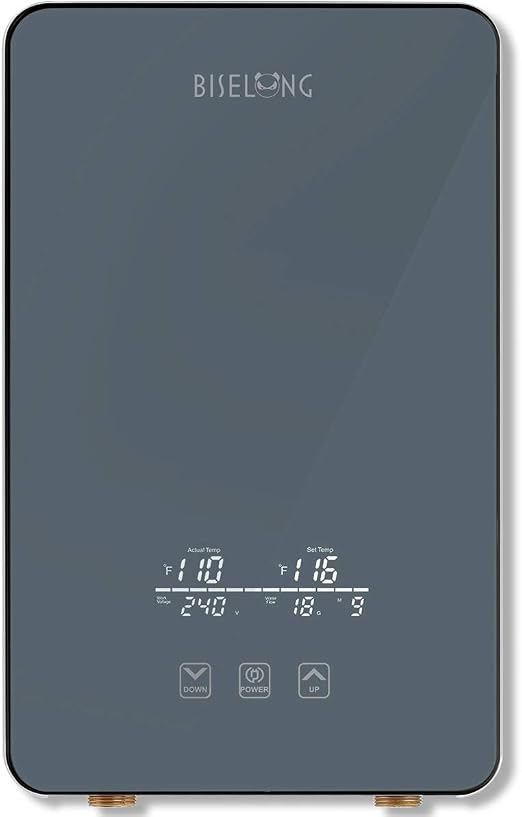
Electric Tankless Hot Water Heater 220/240V
Choosing the right setup depends on your home layout, so compare different tankless water heater installation types before buying.
$150.88 price checked August 2026
What is the CSA mark on a tankless water heater?
The CSA (Canadian Standards Association) mark is a certification that ensures a tankless water heater complies with the safety requirements of the Canadian Standards Association. While common in North America, it serves a similar function to UL by verifying that the hardware is safe for residential or commercial use.
The CSA mark guarantees that the unit has passed tests regarding material integrity, gas valve safety, and structural durability. It ensures that the materials used in the heat exchanger and housing are rated for the high-temperature environments typical of on-demand systems. The CSA mark does not guarantee the energy efficiency rating of the unit or its longevity. It also does not certify the quality of the installation, which remains the responsibility of a licensed professional.
What safety failures do tankless water heaters address?
Tankless water heater safety standards focus on three primary failure modes: gas leaks, electrical shorts, and pressure-related ruptures. Each of these risks is addressed by specific testing protocols during the certification process.
Selecting the correct power source is vital, so explore how to choose a fuel type for your system.
Gas Leak Prevention
Gas safety standards require the inclusion of flame sensors and emergency shut-off valves. These components are designed to detect if a flame has extinguished while the gas supply remains open, preventing the accumulation of combustible gas. Certification ensures these sensors trigger within the required millisecond window to prevent a hazardous environment.
Electrical Short Protection
Because many modern units use electronic igniters and digital displays, electrical safety standards ensure that internal wiring is properly insulated and grounded. This prevents the chassis of the unit from becoming electrified and protects the control board from short-circuiting during power fluctuations.
Pressure Relief and Rupture
Pressure safety standards dictate the design of the heat exchanger and the integration of the Temperature and Pressure (T&P) relief valve. These standards ensure that if the water temperature exceeds safe limits or if the pressure builds too high, the system can vent safely without the unit’s housing failing or exploding.
How can you verify a certification is real?
Verifying a certification involves checking the physical labels on the unit against official records to ensure the mark is not merely a printed graphic on a cardboard box. Because counterfeit safety marks can be printed on low-quality hardware, you should perform these checks before the unit is mounted.
- Check the manufacturing plate: Look for a metal or high-durability plastic plate riveted to the unit’s chassis. This plate should contain the UL or CSA logo, a model number, and a serial number.
- Verify the certification number: Most manufacturers list a specific certification number next to the mark. You can often verify this number on the official UL or CSA websites.
- Inspect the T&P valve: Ensure the Temperature and Pressure relief valve has its own separate safety rating and is not just a standard plumbing fitting.
- Match the labels: Ensure the certification marks on the unit match the documentation provided in the installation manual.
Which marks are non-negotiable for a tankless water heater?
The UL and CSA marks are non-negotiable for any tankless water heater installation in North America. These marks represent the baseline of safety that prevents catastrophic failure during operation. If a unit lacks these certifications, it may not be eligible for homeowner’s insurance coverage in the event of a fire or water damage.
Energy Star ratings and specific flow rate claims (such as 3.5 GPM or 1.2 GPM) are important for performance but are not safety requirements. While these features dictate how the unit performs for your household, the UL and CSA marks dictate whether the unit is safe to operate. You should prioritize the presence of these safety marks above all other marketing labels or decorative stickers.
More Tankless Water Heater explainers and comparisons
- Electric Point of Use Water Heaters Compared
- Choosing the Best Tankless Hot Water Heater for High Flow
- The Tankless Hot Water Heaters That Work Best for Small Spaces
- Indoor Installation Tankless Hot Water Heaters Compared
- Choosing the Best Natural Gas Tankless Hot Water Heater
- The Propane Tankless Hot Water Heaters That Work Best for Home Use