
A grow light is a specialized lighting system designed to provide the specific wavelengths of light required for plants to perform photosynthesis. It serves as a synthetic substitute for sunlight, allowing plants to grow indoors or in environments where natural light is insufficient or inconsistent.
Plants require light to convert carbon dioxide and water into energy. In a standard indoor environment, windows often provide insufficient intensity or the wrong color balance for certain growth stages. A grow light solves this by providing a consistent, controllable spectrum of light that mimics or optimizes the sun’s output, ensuring plants receive the energy they need to develop foliage, flowers, and fruit.
How does a grow light work?
A grow light functions by converting electrical energy into specific light wavelengths through a series of physical and chemical transitions:
- Electricity flows into a light source, such as an LED diode or a high-pressure sodium bulb.
- The energy excites electrons within the light source material, which then release that energy as photons.
- The material of the light source determines which parts of the light spectrum are produced, such as blue, red, or full-spectrum white light.
- The light travels through the air and strikes the surface of the plant leaves.
- Chlorophyll and other pigments in the plant absorb these specific photons to trigger chemical reactions that produce glucose and other nutrients.
Grow Lights we have reviewed in detail
Prices across these 3 run from $115.59 to $219.99; each one has a full review here.


Spider Farmer SF1000
$115.59 price checked August 2026
Beginners can find the top-rated LED grow light for seed starting to ensure proper germination.
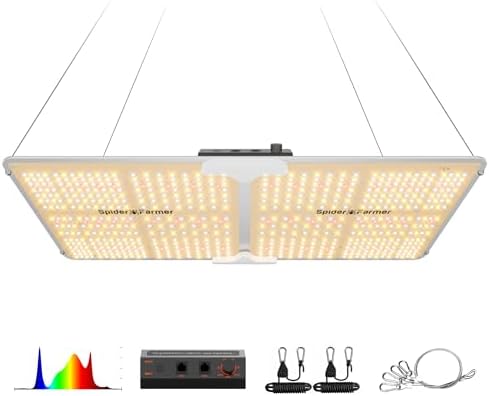
What parts of a grow light matter most?
Several technical components determine the efficiency and output of a grow light, each affecting the plant’s growth and the user’s costs.
The Light Spectrum
The spectrum refers to the range of colors and wavelengths produced by the light. Different stages of growth require different balances; for example, blue light often encourages vegetative growth and compact structures, while red light is typically associated with flowering and fruit production.
PPFD (Photosynthetically Active Radiation)
PPFD is the measurement of how much light is actually available to the plant for photosynthesis, measured in micromoles per second per square meter (µmol/m²/s). While wattage measures how much electricity the light consumes, PPFD measures the actual “food” the plant receives. A high-quality fixture provides a high PPFD at the canopy level to prevent stunted growth.
LED Diodes
In modern systems, the individual LED diodes are the primary components. The quality of these diodes determines the efficiency of the light. Industry standards like the Samsung LM301H or LM301H EVO are used to ensure consistent output and long-term reliability, as lower-quality diodes can dim or fail prematurely.
You can learn common grow light terms and specs to better understand the technical data provided.
Thermal Management
Thermal management involves the heat sinks and cooling systems that dissipate waste heat. Because light production generates heat, a fixture without proper cooling will experience thermal throttling, where the LEDs dim to prevent melting. Effective heat sinks ensure the light maintains its rated output over hours of operation.
What changes in practice when you use a grow light?
Having a grow light changes the environment from a passive space to a controlled production zone where growth becomes predictable.
Consistent Growth Cycles
With a grow light, you can control the “day” and “night” cycles. This allows for consistent growth speeds regardless of the season or the weather outside. You can set specific photoperiods, such as 18 hours of light and 6 hours of darkness, to keep plants on a strict schedule.
Vertical and Indoor Space
Grow lights allow for vertical farming and indoor cultivation in spaces like basements, closets, or warehouses. This removes the requirement for large outdoor footprints or proximity to windows, allowing for production in urban environments.
Uniformity of Light
A well-designed grow light provides uniform coverage across the canopy. Without proper distribution, plants may experience “hot spots” where they receive too much light and “dead zones” where they receive too little. A high-quality fixture ensures that every plant in the area receives enough PPFD to thrive.
Where it does not make a difference
A grow light does not replace the need for proper ventilation or humidity control. While the light provides the energy for growth, it does not manage the air quality or moisture levels that are also required for healthy plants. Additionally, a grow light does not replace the need for a proper nutrient delivery system.
Who needs a grow light?
A grow light is necessary for anyone who needs to produce plants in a controlled indoor environment where natural sunlight is unavailable or insufficient.
Indoor and Urban Growers
People living in apartments or urban areas without access to large outdoor spaces need grow lights to produce food or ornamental plants indoors.
Commercial Producers
Commercial greenhouses and vertical farms require high-output grow lights to maintain high-intensity flowering and fruit production across large scales.
When a grow light is not needed
A grow light is not needed for plants kept in locations with high-intensity, direct sunlight for many hours a day, such as a south-facing backyard garden or a greenhouse with full sun exposure.
Reviewed by the Green Writer editorial team. Green Writer writes these guides from the 200 most-reviewed grow light listings in our retail dataset, not from manufacturer copy.