
A monocrystalline solar panel is a type of photovoltaic module made from a single, continuous crystal structure of silicon. These panels capture sunlight and convert it into electricity by utilizing the photovoltaic effect to generate a flow of electrons.
The primary problem these panels solve is the need for a reliable, scalable source of renewable energy that can be installed on existing structures. By converting light into a usable current, monocrystalline panels allow users to generate power locally, reducing reliance on a centralized grid and providing a way to power electronics, appliances, or battery storage systems directly from the sun.
How does a monocrystalline solar panel work?
The process of converting sunlight into electricity in a monocrystalline solar panel follows a specific sequence of physical interactions:
- Photons from sunlight strike the surface of the silicon crystal.
- The energy from these photons is absorbed by the semiconductor material, which is engineered with specific impurities to create an internal electric field.
- The absorbed energy knocks electrons loose from their atoms, creating “free” electrons.
- The internal electric field forces these free electrons to move in a specific direction toward metal conductive plates.
- This flow of electrons creates a direct current (DC) of electricity.
- An inverter then converts this DC electricity into alternating current (AC) for use in standard household electronics or the power grid.
Monocrystalline Solar Panels we have reviewed in detail
Prices across these 3 run from $175.99 to $209.99; each one has a full review here.

RICH SOLAR 200 Watt 12 Volt Monocrystalline Panel
$175.99 price checked August 2026
Read our full RICH SOLAR 200 Watt 12 Volt Monocrystalline Panel review

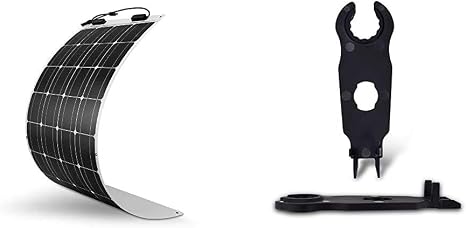
Renogy 100 Watt 12 Volt Flexible Solar Panel
$186.98 price checked August 2026
Read our full Renogy 100 Watt 12 Volt Flexible Solar Panel review
To better understand the technical data, you can learn common monocrystalline solar terminology to decode manufacturer spec sheets.
Components and stages that matter to a buyer
Several technical specifications and materials determine how a monocrystalline solar panel performs in a real-world environment.
The Silicon Crystal Structure
The monocrystalline structure means the silicon atoms are arranged in a continuous, uniform lattice. This structure allows electrons to move more freely than in polycrystalline alternatives, which have multiple crystal grains that can impede flow. Because of this, monocrystalline panels often achieve higher efficiency ratings, meaning they produce more power per square inch of surface area.
Cell Efficiency and Density
Efficiency refers to the percentage of sunlight hitting the panel that is successfully converted into electricity. Monocrystalline panels often reach efficiency levels above 20% because of their high-purity silicon. For a buyer, higher efficiency means you can generate the same amount of power using fewer panels, which is a critical factor when roof space or ground area is limited.
N-Type TOPCon Technology
N-Type TOPCon (Tunnel Oxide Passivated Contact) is a high-end reference tier in current solar technology. It involves a specific way of treating the silicon surface to reduce electron loss. These cells are known for lower degradation over time and better performance in low-light conditions compared to standard P-type cells.
Bifacial Module Design
Bifacial modules are designed to capture light on both the front and rear sides of the panel. This allows the rear side to collect “albedo” light—sunlight reflected off the ground or nearby surfaces. In certain installations, such as those over white gravel or snow, bifacial modules can increase the total energy yield of the system.
MC4 Connectors
MC4 connectors are the industry standard for creating waterproof, secure electrical connections between solar panels. Using standardized connectors ensures that panels from different manufacturers can be wired together in a single string, provided the voltage and current ratings are compatible.
What does having a monocrystalline solar panel change in practice?
The presence of monocrystalline panels changes the physical requirements and output expectations of a solar array. Because these panels are highly efficient, they are the standard choice for residential rooftops where every square foot of space must be maximized. If you have a small area but high energy needs, the high power density of monocrystalline cells allows for a compact system that meets your requirements.
In practice, the difference shows up in the “power density” of the installation. A system using these panels will require fewer total modules to reach a specific kilowatt-peak (kWp) target compared to lower-efficiency options. However, the difference does not show up in the type of electricity produced; the AC power delivered to your wall outlet is identical regardless of whether the source was a monocrystalline or polycrystalline cell.
A significant practical consideration is the temperature coefficient. Monocrystalline panels generally perform well in heat, but like all solar technology, their efficiency drops as the temperature rises. A buyer should confirm the temperature coefficient of the specific panel to understand how much power will be lost on very hot days.
Who needs a monocrystalline solar panel?
A monocrystalline solar panel is suitable for users who prioritize high efficiency and space optimization. If you have a limited installation area, such as a small roof or a compact backyard, these panels provide the highest power output per square meter.
These panels are also appropriate for users seeking long-term stability. Because of the high-purity silicon used in the manufacturing process, these modules often exhibit lower degradation rates over a 25-year lifespan. If you want a system that maintains a high percentage of its original output as it ages, this technology is a standard choice.
Conversely, these panels are not necessary for large-scale industrial projects where land area is abundant and cost-per-watt is the primary metric. In scenarios where you have vast amounts of ground space and a lower budget, other types of solar modules may be more economical because the premium paid for the monocrystalline crystal structure is not required to meet the power goal.
The other Monocrystalline Solar Panel guides we have published
- Choosing the Best Monocrystalline Solar Panel for RV and Boat
- The Monocrystalline Solar Panels That Work Best for Camping
- Which High Efficiency Monocrystalline Solar Panel Is Best for Off Grid?
- Best Flexible Monocrystalline Solar Panels
- Monocrystalline Solar Panels for 12V Battery Systems Compared
- Choosing the Best Bifacial Monocrystalline Solar Panel for Maximum Yield