
When researching monocrystalline solar panels, most technical data points are load-bearing indicators of how much electricity a panel will produce over its lifespan. Terms like “high-efficiency” or “premium-grade” are marketing vocabulary that lack specific meaning without the accompanying numbers. To make an informed decision, you must look past these adjectives and focus on specific metrics such as wattage, conversion efficiency, and cell architecture. This guide decodes the technical specifications found on listings to help you understand what each dollar buys in terms of actual power output.
Monocrystalline Solar Panel Efficiency and Power Metrics
- Wattage (W) – This is the maximum power output of the panel under standard test conditions. A higher wattage means the panel can generate more electricity in the same amount of space.
- Conversion Efficiency (%) – This measures the percentage of sunlight hitting the panel that is successfully converted into usable electricity. Higher percentages mean more power per square foot of surface area.
- N-Type TOPCon Cells – This is a current high-end technology benchmark for cell manufacturing. N-Type cells offer lower degradation over time and better performance in low-light conditions compared to standard P-type cells.
- Bifacial Modules – These panels are designed to capture sunlight on both the front and rear sides. Bifacial modules can increase total energy yield by capturing light reflected off the ground or nearby surfaces.
- Temperature Coefficient – This number describes how much a panel‘s power output drops as the temperature rises. A lower (closer to zero) temperature coefficient is better, as it ensures the panel maintains efficiency in hot climates.
- Degradation Rate – This is the percentage of power the panel loses each year as it ages. A lower annual degradation rate ensures the panel remains productive for its 25-year expected lifespan.
The Importance of Cell Density
Cell density refers to the number of cells packed into a specific surface area. The 18BB (18 Busbar) cell count is a key threshold where increased cell density allows for higher power output in smaller surface areas. Higher busbar counts generally improve current collection and reduce internal resistance.
Where these choices show up in our reviews
These 3 have their own full review on this site, and run from $186 to $259.99.
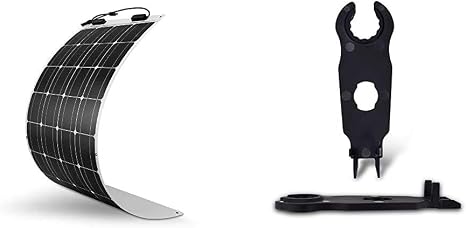
Renogy 100 Watt 12 Volt Flexible Solar Panel
$186.98 price checked August 2026
Read our full Renogy 100 Watt 12 Volt Flexible Solar Panel review

ECO-WORTHY 100 Watt Monocrystalline Solar Panel
$186 price checked August 2026
Read our full ECO-WORTHY Solar Panel review
You can further distinguish your options by learning about different types of monocrystalline panels available on the market today.

JJN Bifacial 400 Watt 12V 10BB Solar Panel
$259.99 price checked August 2026
Read our full JJN Bifacial 400 Watt 12V 10BB Solar Panel review
Monocrystalline Solar Panel Physical and Material Specs
- Dimensions (mm/inches) – The physical length and width of the panel. You must confirm these measurements against your mounting surface or roof space before ordering.
- Weight (kg/lbs) – The total mass of the panel. This is a critical factor for determining if your mounting structure or roof can safely support the load.
- Frame Material – Most panels use anodized aluminum. This provides structural integrity and corrosion resistance; ensure the material matches your local environmental conditions.
- Glass Thickness – This is the thickness of the protective front layer, often measured in millimeters. Thicker glass provides better impact resistance against hail or debris.
- Junction Box – The component on the back of the panel where the cables connect. A high-quality junction box ensures a secure, weather-proof connection for the internal wiring.
Standard Connection Hardware
MC4 Connectors are the industry standard for waterproof, secure electrical connections between modules. Using standard connectors ensures that the panels you buy will be compatible with standard mounting hardware and cabling.
Monocrystalline Solar Panel Compatibility and Electrical Specs
- Open Circuit Voltage (Voc) – The maximum voltage a panel produces when not connected to a load. You must ensure this does not exceed the limits of your charge controller or inverter.
- Short Circuit Current (Isc) – The maximum current the panel can produce. This helps determine the correct wire gauge needed to prevent power loss over long distances.
- Maximum Power Voltage (Vmp) – The voltage at which the panel operates at its peak power. This is the primary value used to size your system’s electrical components.
- 12V vs 24V Systems – This is a common system choice where the voltage determines the wiring gauge and charge controller requirements. Higher voltage systems typically allow for thinner, less expensive wiring over long runs.
- Shading Clipping – This occurs when one shaded cell causes a bottleneck in the entire string. Using non-series-matched panels can lead to this failure mode, where the output of the whole string drops to the level of the shaded cell.
- Voltage Mismatch – This is a failure mode that occurs when connecting panels with incompatible Vmp and Imp values. Mismatched voltages can lead to significant power loss or permanent equipment damage.
Avoiding System Failures
Voltage mismatch occurs when panels with different electrical characteristics are wired in a series string. To avoid this, ensure that every panel in a single string has the same Vmp and Imp ratings to maintain consistent power flow.
Commonly Confused Monocrystalline Solar Panel Terms
Several terms in the solar industry sound similar but represent different physical or electrical properties. Understanding these distinctions is necessary to avoid ordering incompatible components.
Efficiency vs. Wattage
Efficiency is a ratio of how well the panel works, while wattage is a measure of total output. A panel can have high efficiency but low wattage if it is physically very small, or high wattage but low efficiency if it is very large.
Open Circuit Voltage (Voc) vs. Maximum Power Voltage (Vmp)
Voc is the theoretical maximum voltage the panel can produce in a vacuum, while Vmp is the voltage it produces while actually doing work. You must size your inverter based on Vmp, but you must check Voc to ensure you don’t blow a fuse or damage a controller when the sun is at its peak.
Bifacial vs. Monofacial Panels
Monofacial panels only produce power from the front side, whereas bifacial panels produce power from both sides. Bifacial panels require specific installation methods, such as being mounted on a rack with clear space underneath, to capture the reflected light.
Browse our other Monocrystalline Solar Panel pages
- Choosing the Best Monocrystalline Solar Panel for RV and Boat
- The Monocrystalline Solar Panels That Work Best for Camping
- Which High Efficiency Monocrystalline Solar Panel Is Best for Off Grid?
- Best Flexible Monocrystalline Solar Panels
- Monocrystalline Solar Panels for 12V Battery Systems Compared
- Choosing the Best Bifacial Monocrystalline Solar Panel for Maximum Yield