
When evaluating tankless water heater options, most marketing copy focuses on “instant” heat or “endless” supply, which are descriptive results rather than technical specifications. To make an informed purchase, you must look past these adjectives to the load-bearing data: flow rates, BTU output, and venting requirements. These numbers dictate whether you can run a shower without a temperature drop or if the unit can handle your specific fuel source. Identifying these core metrics allows you to ignore decorative marketing and focus on the hardware limits that determine if a system will actually work in your home.
Tankless Water Heater Capacity and Performance Terms
Capacity terms define the volume of hot water the unit can produce and the speed at which it can heat it.
- Flow Rate (GPM) – This measures how many gallons per minute the unit produces. A higher GPM is better for households that need to run multiple fixtures, such as a shower and a dishwasher, simultaneously.
- BTU (British Thermal Units) – This is the measure of the unit’s heating power. A higher BTU rating allows the unit to heat water faster or maintain a high flow rate at higher temperatures.
- Temperature Rise – This is the difference between the incoming cold water temperature and the desired hot water temperature. A larger temperature rise requires a unit with a higher BTU rating to maintain a steady flow.
- Maximum Flow Rate – This is the maximum GPM the unit can provide at a specific temperature rise. You should choose a unit where this number exceeds your highest expected demand, such as 3.5 GPM for a standard shower.
- Heating Capacity – This is often expressed as a combination of BTU and GPM. It represents the total energy available to heat the water passing through the heat exchanger.
- Recovery Rate – While tankless units provide “instant” hot water, this term describes how quickly the heat exchanger can bring a new volume of water to the target temperature. Higher values mean more consistent heat during high-demand periods.
Where these choices show up in our reviews
These 3 have their own full review on this site, and run from $169.99 to $289.99.
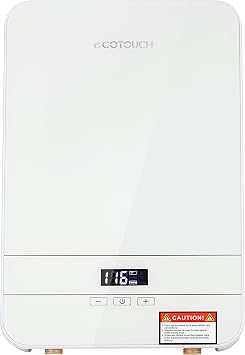
ECOTOUCH ECO90 9KW 240V Tankless Water Heater
$169.99 price checked August 2026
Read our full ECOTOUCH ECO90 review
If your setup requires an exterior unit, see the best outdoor tankless hot water heater options available.


FOGATTI Natural Gas Tankless Water Heater
You might also consider the best electric point of use water heater for specific bathroom or kitchen needs.
$289.99 price checked August 2026
Tankless Water Heater Physical and Material Terms
Physical terms describe the construction, size, and material standards of the heater’s housing and internal components.
- Condensing – This refers to a design that captures waste heat from exhaust gases to pre-heat incoming water. Condensing units are generally more energy-efficient but have different venting requirements than non-condensing models.
- Non-Condensing – These units release waste heat through the exhaust. They are often simpler to install regarding venting but may have a higher energy footprint than condensing models.
- Stainless Steel – This refers to the material of the heat exchanger and housing. Higher grade stainless steel, such as 316, offers better resistance to corrosion from hard water than lower grades.
- Copper Heat Exchanger – This identifies the material used to transfer heat to the water. Copper is a highly efficient thermal conductor and is a standard material for many high-performance units.
- Compact Design – This refers to the physical footprint of the unit. Smaller dimensions are better for indoor installations where wall space is limited, but they may have lower BTU limits.
- Weatherproof Rating – This is the standard (such as IPX ratings) that determines if a unit can be installed outdoors. You need a high rating for outdoor units to withstand rain and UV exposure.
Tankless Water Heater Compatibility and Fuel Terms
Compatibility terms ensure the unit can connect to your home’s existing gas lines, water lines, and venting systems.
To better understand the different technologies, explore the various types of tankless water heaters available today.
- Natural Gas – This is a fuel source with a specific pressure and BTU content. You must ensure the unit is specifically rated for natural gas, as it uses different internal components than propane.
- Propane (LP) – This is a fuel source used in many rural areas. Propane units are designed to handle the different pressure and energy density of liquid propane.
- Vent Type – This specifies the exhaust path, such as PVC, stainless steel, or B-vent. The material and diameter of the vent must match the unit’s specific requirements to ensure safe operation.
- Inlet/Outlet Size – These are the physical dimensions of the water connection points, typically measured in inches. You must confirm these match your existing plumbing to avoid using adapters.
- Voltage (240V/120V) – For electric tankless units, this is the required power supply. Most high-capacity electric units require a 240V circuit, which may require a dedicated electrical upgrade.
- Hard Water Protection – This refers to features like scale prevention systems or easy-access cleaning ports. In areas with high mineral content, these features are vital for extending the life of the heat exchanger.
Commonly Confused Tankless Water Heater Terms
These terms are frequently confused by buyers but represent distinct mechanical differences in how a heater functions.
Flow Rate vs. BTU
Flow rate is the volume of water (gallons per minute), while BTU is the heat energy. A high BTU rating does not guarantee a high flow rate if the temperature rise required is too large; both numbers must be balanced to meet your needs.
Condensing vs. Non-Condensing
Condensing units are a technology for recovering waste heat to increase efficiency, whereas non-condensing units are a standard design that releases that heat. The primary difference is the efficiency of the heat exchange and the specific venting materials required by local codes.
Natural Gas vs. Propane
While both are gas fuels, they have different pressures and energy densities. A unit rated for natural gas will not function correctly on a propane line without specific internal modifications, and vice versa.
Because these installations involve gas lines and high-pressure water, you should confirm all local building codes and plumbing requirements before purchase. A qualified installer must perform the final installation to ensure the unit is vented and fueled according to safety standards.
Browse our other Tankless Water Heater pages
- Indoor Installation Tankless Hot Water Heaters Compared
- Choosing the Best Natural Gas Tankless Hot Water Heater
- The Propane Tankless Hot Water Heaters That Work Best for Home Use
- Which Outdoor Tankless Hot Water Heater Is Best?
- Best Condensing Tankless Hot Water Heaters
- Electric Point of Use Water Heaters Compared