
Green Writer is reader-supported: some links on this page are affiliate links, and as an Amazon Associate Green Writer earns from qualifying purchases at no extra cost to you. Learn more.
Whole house water filtration is a system installed at the main water entry point of a building to treat the entire water supply for every tap and shower. You need this system if your municipal supply or well water contains contaminants that affect the taste, odor, or safety of your water throughout the home. You should measure your local water hardness and identify specific contaminants like chlorine or iron before choosing a system, as these requirements dictate which filtration stages are necessary for your specific location.
How whole house water filtration systems treat water for all household uses
Most homeowners encounter issues when water contains minerals that leave scale on fixtures or chemicals that leave a medicinal aftertaste. Standard point-of-use filters, like those under a kitchen sink, only treat the water used for drinking or cooking. A whole house system addresses the problem of sediment and chemicals affecting laundry, dishwashing, and bathing, which prevents the buildup of minerals in pipes and appliances.
How Whole House Water Filtration Works
The filtration process happens in a linear sequence as water moves from the source into the home’s plumbing. The system works by forcing water through various physical and chemical barriers that trap impurities based on size and chemical properties.
Before purchasing, verify the inlet and outlet sizes to ensure the unit matches your existing pipes.
- Water enters the system from the main supply line and passes into the first stage of filtration.
- The water moves through a sediment filter, which physically traps solid particles like sand, silt, and rust.
- The water then flows into the secondary stages, such as carbon filtration, where chemicals are removed through adsorption.
- The treated water exits the final housing unit and enters the home’s internal plumbing, reaching every faucet and showerhead.
Whole House Water Filtration Systems we have reviewed in detail
Prices across these 3 run from $255.98 to $1310.99; each one has a full review here.
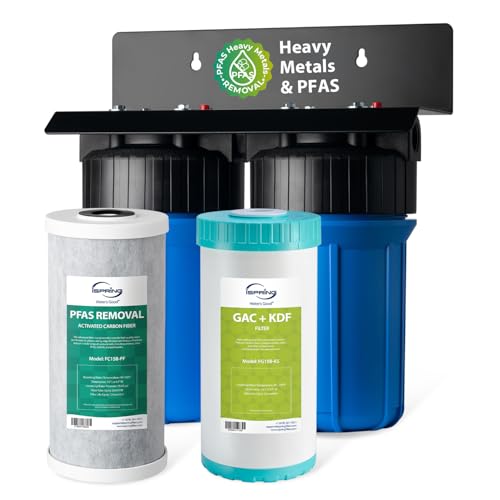


Parts and Stages of Whole House Water Filtration
The effectiveness of a whole house water filtration system depends on the specific components used to trap different types of contaminants. Each part serves a distinct role in the purification process, moving from large-scale physical removal to microscopic chemical treatment.
The Role of the Sediment Filter
A sediment filter is the first line of defense in the system. It removes large particles like sand and rust before they can clog finer filters or damage internal plumbing. By removing these solids first, the sediment filter extends the life of the more expensive filtration media that follows it in the sequence.
If you are concerned about “forever chemicals,” see the PFAS reduction rate requirements for effective filtration.
The Carbon Block for Chemical Removal
The carbon block is the stage responsible for improving the sensory qualities of your water. It adsorbs chemicals like chlorine, which is often added to municipal water for disinfection but can leave a chemical taste and odor. By passing through this media, the water becomes more palatable for drinking and bathing.
How the housing unit protects filter media from water pressure
The housing unit is the physical container that holds the filter media in place. It protects the filter media from being washed away by water pressure and contains the pressurized water as it moves through the filtration process. Choosing a housing unit with a large surface area helps prevent a pressure drop, which is the reduction in water flow that occurs when a filter becomes restricted.
How the NSF/ANSI 42 standard defines aesthetic filtration quality
Filtration quality is often defined by specific certifications that verify what the system can remove. The NSF/ANSI 42 standard is the industry standard for aesthetic effects like chlorine, taste, and odor reduction. If you primarily want to improve the smell and taste of your water, this is the relevant standard to look for.
Explore the different technologies available by viewing the various types of whole house water filtration systems.
Requirements for NSF/ANSI 53 certification to remove heavy metals
For systems that need to address more serious concerns, the NSF/ANSI 53 certification is required for health-related contaminants like lead and mercury. This standard ensures the media is capable of removing specific heavy metals and other regulated substances. It is important to note that NSF/ANSI 58 is the standard for reverse osmosis, which is distinct from whole house filtration and is typically used for point-of-use drinking water.
What Whole House Water Filtration Changes in Practice
Installing a whole house water filtration system changes the daily experience of using water in your home by providing consistent quality across all fixtures. You will notice the difference in the cleanliness of your laundry, as sediment and minerals are removed before they hit your washing machine. Shower water will feel different because the chemicals that cause skin irritation or hair dullness are removed at the source.
For a deep dive into that specific unit, see our full Express Water WH100SC review.
How whole house filtration protects plumbing from mineral scale buildup
The system also protects your plumbing infrastructure over the long term. By removing minerals and particles before they enter your pipes, you reduce the risk of scale buildup that can restrict water flow or damage water heaters. However, a whole house filtration system does not change the water’s hardness in the same way a softener does. If you have very hard water that creates white crust on faucets, filtration alone may not be enough to stop the mineral deposits.
How Does This Compare to Other Systems?
How does this compare to a standard sediment filter setup?
A whole house water filtration system usually includes a sediment filter as its first stage but adds additional stages like carbon. While a standalone sediment filter only removes visible particles like dirt and sand, this system also addresses invisible chemicals and improves the taste of the water.
How does the iron removal compare to a standard carbon-only system?
Iron removal in a whole house system often requires specialized media or a multi-stage process to prevent staining. A standard carbon-only system is excellent for chlorine and taste, but it may not be sufficient to remove high levels of dissolved iron that cause orange staining on fixtures.
Detailed performance data is available in our full Hardless NG4L Filter review.
How does this compare to a multi-stage system for heavy sediment?
A system designed for heavy sediment focuses on high-capacity filtration to handle large volumes of sand or silt.
How does the filtration quality compare to a standard whole house sediment filter?
The filtration quality of a full system is higher because it addresses both physical and chemical contaminants. A standard whole house sediment filter only stops the “stuff” you can see in the water, whereas a full filtration system removes the chemicals and minerals that affect the water’s chemical profile.
Is this better than a standard salt-based softener for my specific needs?
A salt-based softener is specifically designed for hardness removal by exchanging calcium and magnesium ions with sodium. Whole house water filtration is better if your primary goal is removing chlorine, sediment, or heavy metals, but it cannot replace a softener for preventing scale buildup from hard water.
See the technical breakdown in our full PUREPLUS 2-Stage Filter review.
Who Needs Whole House Water Filtration
A whole house water filtration system is necessary for residents who live in areas with high chlorine content in the municipal supply or for those on well water with high sediment and mineral content. It is also a requirement for households that notice staining on laundry or frequent mineral buildup in showerheads and faucets. If your water has a noticeable odor or a metallic taste, a whole house system provides the necessary treatment for every tap in the home.
When a point-of-use system is better than whole house filtration
You do not need a whole house water filtration system if your local water is already high-quality and meets all aesthetic and safety standards. If your only concern is the water you drink, a point-of-use system under the kitchen sink is a more targeted and less expensive solution. However, for anyone who wants consistent water quality for bathing, cleaning, and appliances, a whole house system is the standard choice.
The other whole house water filtration guides we have published
- Best Whole House Water Filters for Sediment and Rust
- Whole House Water Filters for Chlorine and Odor Compared
- Choosing the Best Whole House Water Filter for Large Families
- Removing Well Water Smell With a Whole House Water Filter
- Best Whole House Water Filters for PFAS Removal
- Whole House Water Filters for Heavy Metals Compared