
Green Writer is reader-supported: some links on this page are affiliate links, and as an Amazon Associate Green Writer earns from qualifying purchases at no extra cost to you. Learn more.
An above ground pool heater is a mechanical system that transfers heat into a pool’s water to maintain a consistent swimming temperature. You need a system capable of maintaining a steady temperature when the ambient air temperature drops below the desired pool temperature. You must first measure your pool’s total gallon volume to ensure the heater’s heating capacity can reach your target temperature within a reasonable timeframe.
How above ground pool heaters provide consistent thermal energy for swimming
Standard outdoor pools lose heat rapidly to the air and water evaporation, often making the water unswimmable in early morning or late evening. An above ground pool heater solves this by providing a constant source of thermal energy, allowing for a longer swimming season and a more consistent experience. Without a dedicated heating system, the water temperature relies entirely on solar radiation, which fluctuates based on cloud cover, sun angle, and local weather conditions.
Understanding your budget is essential, so view what above ground pool heaters cost at every different price point.
How an Above Ground Pool Heater Works
The operation of an above ground pool heater relies on a closed-loop refrigeration cycle that moves heat from the water to the air. The process follows a specific sequence of physical changes:
- The water is pumped from the pool into the unit, where it passes over an evaporator coil.
- A refrigerant inside the coil absorbs heat from the water, changing the refrigerant from a liquid to a gas.
- The compressor then takes this gas and increases its pressure, which raises the temperature of the refrigerant significantly.
- The hot gas travels to the heat exchanger, where it transfers its thermal energy to the outside air.
- As the gas cools and loses heat, it condenses back into a liquid.
- The expansion valve then reduces the pressure of the liquid refrigerant, preparing it to enter the evaporator coil and repeat the cycle.
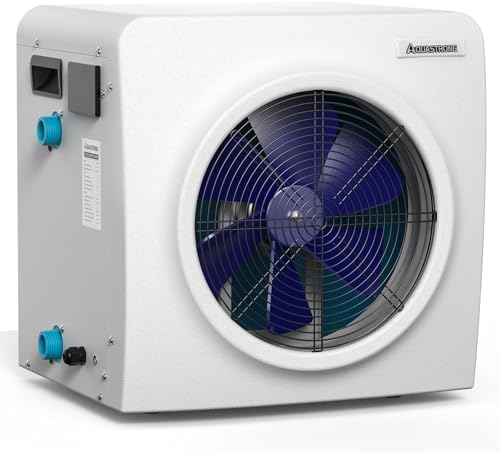
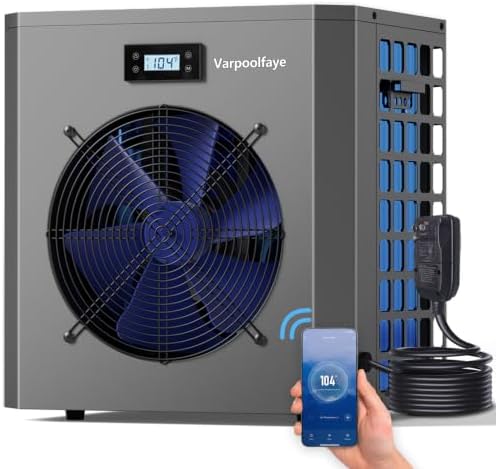
Above Ground Pool Heaters we have reviewed in detail
Prices across these 3 run from $526.99 to $1979.10; each one has a full review here.
To better understand the technical data, review the above ground pool heater terms and specs explained in plain language.

Parts and Standards That Matter to a Buyer
Several internal components and manufacturing standards determine how efficiently an above ground pool heater operates and how long it lasts in a wet environment.
The Role of the Heat Exchanger
The heat exchanger is the component that transfers heat between the refrigerant and the pool water. The material of this part is a primary factor in the system’s lifespan. Buyers should look for Titanium vs. Copper Heat Exchangers as a standard of durability. Titanium heat exchangers provide superior resistance to corrosion and chemical degradation in pool water compared to copper. This choice determines whether the internal tubing will remain intact or succumb to the harsh chemicals and minerals typically found in treated pool water over several years.
Selecting the right power supply is critical, so learn how to choose your operating voltage for different heater models.
How compressor technology and inverter standards improve pool heater efficiency
The compressor is the core component that circulates and compresses refrigerant. The type of compressor determines how the unit handles varying heat demands. Inverter vs. On/Off Compressors is the standard that dictates the ability to maintain precise temperature setpoints and energy efficiency during low-load periods. An inverter compressor can vary its speed to match the exact heating requirement, whereas an on/off compressor only runs at full power or stays off. This difference results in more consistent water temperatures and lower energy consumption during periods when the pool only needs minor heating.
Expansion Valves and Evaporator Coils
The evaporator coil absorbs heat from the pool water in the heat pump cycle, while the expansion valve regulates the flow of refrigerant to maintain optimal pressure. If the expansion valve fails to regulate pressure correctly, the refrigerant may not change states efficiently, causing the system to lose heating capacity. A well-regulated flow ensures that the refrigerant remains at the correct temperature and pressure to maximize the heat transfer from the water to the coil.
Different technologies offer various benefits, so explore the different types of above ground pool heaters available today.
What an Above Ground Pool Heater Changes in Practice
Owning an above ground pool heater changes the usability of a backyard pool by removing the variable of the weather. In practice, this means the water remains at a consistent temperature even when the sun goes down or the air temperature drops into the 60s or 70s Fahrenheit. You can plan swimming sessions without checking the forecast for clear skies, as the system provides a steady heat output regardless of cloud cover.
Why matching pool heater size to water volume prevents equipment burnout
The difference is most noticeable during the shoulder seasons of spring and autumn. During these times, solar heating is often insufficient to keep the water at a comfortable level, but a pool heater can maintain a steady temperature for several hours of use. Conversely, the heater does not change the physical size of the pool or the speed at which the water circulates; it only changes the thermal energy of the water. If the heater is under-sized for the gallon volume of the pool, the water will warm up very slowly, which is a common mistake that leads to high electricity costs and equipment burnout.
For those interested in electric models, see our full XKP2207BP Pool Heater review for a detailed spec breakdown.
Frequently asked questions about above ground pool heaters
How does this compare to a gas heater in terms of ease of use?
An above ground pool heater using a heat pump is generally simpler to operate because it connects to standard electrical infrastructure. Unlike gas heaters, which may require specialized gas lines, permits, and complex ignition systems, these units typically operate with a power switch and a thermostat. You do not need to manage fuel supplies or worry about gas line safety, though they do require a dedicated electrical circuit.
How much will my electricity bill go up running this every day?
The impact on your electricity bill depends heavily on the Coefficient of Performance (COP), which measures the efficiency of heat produced relative to energy consumed. A high COP means the unit produces more heat for every watt of electricity it pulls from your home’s system. Because the unit only runs when the water temperature falls below your set point, the daily cost is often lower than the peak demand of a gas heater, but it will still increase your monthly utility costs based on the total hours of operation.
If you need high-efficiency heating, view our full ECOPOOLTECH EE100 review to see how this inverter performs.
How much is it going to cost me to run this every day in the winter?
Running an above ground pool heater in the winter is significantly more expensive because the temperature difference between the air and the water is much larger. When the air is very cold, the system must work harder and run longer to maintain the set point. In extreme cold, the efficiency of the heat pump drops, meaning the cost per degree of water temperature increase rises sharply compared to operation in the summer months.
How does the titanium heat exchanger hold up against corrosion over time?
The titanium heat exchanger is designed to resist the corrosive effects of salt, chlorine, and minerals in the pool water. Because titanium forms a stable oxide layer, it does not pit or degrade like copper or stainless steel might when exposed to constant chemical exposure. This material choice ensures that the internal heat transfer surfaces remain intact, preventing leaks and maintaining the system’s heating capacity over a long service life.
For a deep dive into heat pump technology, read our full EU-PLC5100-E Heat Pump review for more details.
How does the inverter compressor handle extreme cold vs a standard heater?
An inverter compressor handles extreme cold by modulating its speed to maintain the best possible efficiency as the outdoor temperature drops. While a standard on/off compressor will cycle on and off at a fixed speed, the inverter can slow down to maintain a steady state. This allows the system to keep running more efficiently in lower temperatures, though it still faces physical limits on how much heat it can extract from very cold air.
Who Needs an Above Ground Pool Heater
You need an above ground pool heater if you want to swim during the early morning, late evening, or during the cooler months of the year. It is a necessary requirement for anyone who wants to maintain a consistent temperature regardless of cloud cover or seasonal changes. If your primary goal is only to have a pool that is warm during the peak of a hot summer day, you may find that solar heating is sufficient for your needs.
High-capacity options are available, so see our full review of the 58000 BTU Pool Heat Pump for high-volume needs.
When to choose a heat pump based on energy and climate needs
A buyer should choose a heat pump if they prioritize consistent water temperature and energy efficiency over the high-heat output of gas systems. You should avoid these systems if your local electrical infrastructure cannot support the required operating voltage or if you do not have a way to maintain a proper flow rate of water through the unit. Because these units rely on air temperature, they are less effective in regions where the air stays consistently below freezing for long periods.
The other pool warming system guides we have published
- Energy Efficient Pool Heat Pumps Compared
- Choosing the Best Above Ground Pool Heater for 110v Outlet
- The Above Ground Pool Heat Pumps That Work Best for Large Pools
- Which Pool Heater with Wifi App Control is Best?
- Best Above Ground Pool Warmers for Backyards
- Keeping Your Backyard Pool Warm in Fall With an Above Ground Pool Heater