
Green Writer is reader-supported: some links on this page are affiliate links, and as an Amazon Associate Green Writer earns from qualifying purchases at no extra cost to you. Learn more.
Maximum Gallon Volume for an above ground pool heater should match or exceed the total water capacity of your pool to ensure efficient heating. You need a system rated for at least 5,000 Gallons to heat a standard small pool to 80 degrees, while larger backyard pool heaters typically handle 10,000 Gallons or more depending on the desired heating speed.
Recommended Maximum Gallon Volume by Use Case
| Use Case | Recommended Maximum Gallon Volume | Why this number |
|---|---|---|
| Small above ground pool | 5,000 Gallons | Calculated to heat a 5,000 gallon pool to 80 degrees. |
| Medium backyard pool | 10,000 Gallons | Provides sufficient capacity for standard residential volumes. |
| Large residential pool | 15,000 Gallons | Supports high-volume requirements for larger backyard footprints. |
| Commercial-scale volume | 45,000 Gallons | Matches the high end of the 528 to 45,000 Gallon range found in evaluated listings. |
Where these choices show up in our reviews
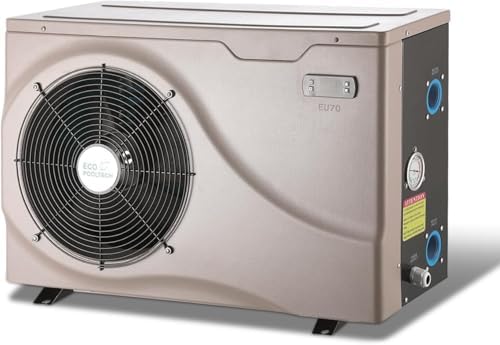
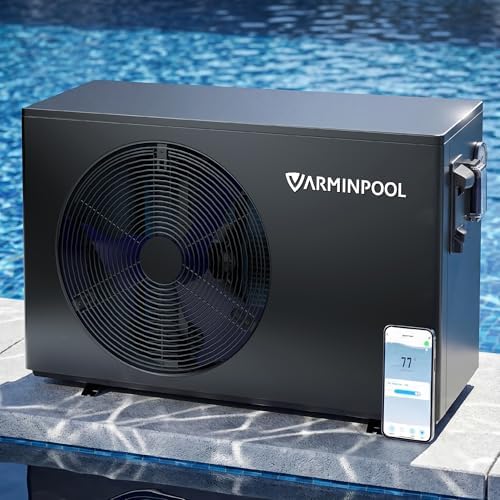
Each of the 3 shown here has its own full review on this site; they run from $1099.99 to $1499.

What happens if you under-size or over-buy an above ground pool heater?
Under-sizing an above ground pool heater occurs when the Maximum Gallon Volume of the unit is lower than the actual volume of water in the pool. In this scenario, the heater runs continuously without reaching the target temperature because it cannot move enough heat energy into the large mass of water. This constant operation leads to high electricity bills and can cause the equipment to burn out prematurely due to sustained high-load stress.
Proper circulation is vital, so learn how to select the right flow rate for above ground pool heaters for your setup.
Over-buying an above ground pool heater means selecting a unit with a Maximum Gallon Volume significantly higher than what your pool requires. While this ensures the pool reaches the target temperature quickly, it represents a significant upfront cost for capacity you will never utilize.
The mistake most buyers make with Maximum Gallon Volume
Buyers often focus solely on the Maximum Gallon Volume while overlooking the actual heating speed and power consumption of the unit. You might select a heater that can technically handle your pool’s volume, but find it takes several days to raise the temperature by just a few degrees. This happens because Maximum Gallon Volume measures the total capacity the unit can effectively heat, not the rate at which it produces heat.
For a specific model breakdown, see our full KSPF-005L3R1A1 Heat Pump review for detailed specifications.
You should instead optimize for the heating capacity, which measures the total amount of heat energy produced per hour. Check the heating capacity to ensure it aligns with how quickly you want the water to warm up during the day.
How Maximum Gallon Volume interacts with other deciding specs
Maximum Gallon Volume interacts with heating capacity and operating voltage to determine the practical limits of your pool warming system. A high Maximum Gallon Volume figure is wasted if the heating capacity is too low to move the needle on a large body of water. If the heating capacity is insufficient, the heater will struggle to maintain temperature against environmental heat loss.
You can also view our full MICOE Pool Heater review to see how its 18000 BTU output performs.
Matching home operating voltage to the required heater power supply
Operating voltage also dictates the power available to the heater. For example, a 220V power supply determines the maximum BTU output and the electrical infrastructure required for the home. If you choose a heater with a high Maximum Gallon Volume that requires 220V, but your home only supports 110V, the unit will not function. You must ensure the electrical pressure of your home matches the requirements of the heater’s capacity.
Ensuring pump flow rate supports the pool heater volume capacity
Flow rate (GPM) serves as another critical limit on how much volume a heater can actually process. If the water flow rate is too low, the heat exchanger can overheat and trigger a thermal safety shutdown. Even if a heater is rated for a high Maximum Gallon Volume, it cannot heat the water if the pump cannot move enough water through the system to distribute that heat. You must confirm your pump’s flow rate is sufficient for the volume of water you intend to heat.
High-output seekers should look at our full FibroPool FH270 review to see its 70,000 BTU capabilities.
How do you determine the right volume for your backyard pool heater?
You determine the right volume by first measuring the exact dimensions of your pool to calculate the total gallons of water it holds. Once you have the total volume, you compare it to the Maximum Gallon Volume stated on the heater’s specifications. You then look for a heater where that figure is equal to or slightly higher than your pool’s capacity.
Identifying how under-sized pool heaters fail to warm larger volumes
A buyer might find themselves in a situation where the pool feels cold despite the heater running for hours. They check the data and realize the heater is rated for 7,000 Gallons, but their pool holds 8,000 Gallons. By identifying this discrepancy, they can see that the unit is under-sized for their specific volume.
For a compact 12000 BTU option, see our full DOEL SP-3002 review for a data-driven spec analysis.
Selecting a pool heater with sufficient capacity for specific water volumes
Consider a scenario where you want to heat a 5,000 gallon pool to 80 degrees. You would look for a heater that explicitly states it can handle at least 5,000 Gallons. This ensures the unit has the capacity to manage the entire mass of water without running into the failure modes of under-sizing.
More above ground pool heater explainers and comparisons
- Best Above Ground Pool Warmers for Backyards
- Keeping Your Backyard Pool Warm in Fall With an Above Ground Pool Heater
- Which Above Ground Pool Heater Keeps Water Warm at Night?
- The Above Ground Pool Heaters That Make a Small Pool Usable in Cold Weather
- The Above Ground Pool Heat Pumps That Work Best for Small Pools
- Which Pool Heat Pump Is Best for a 5500 Gallon Pool?