
Green Writer is reader-supported: some links on this page are affiliate links, and as an Amazon Associate Green Writer earns from qualifying purchases at no extra cost to you. Learn more.
Operating Voltage for above ground pool heaters is the amount of electrical pressure, measured in V, required to power the unit. You must match the heater’s voltage to the specific electrical circuit provided by your home’s infrastructure to ensure the system functions.
Which Operating Voltage Suits Your Home?
| If this is you | The Operating Voltage that suits you | Why |
|---|---|---|
| You live in a standard North American residence with a typical household outlet. | 110V to 120V | Standard household circuits in these regions provide 120V, which matches the median voltage found in the research. |
| You have a dedicated high-power circuit installed for large outdoor appliances. | 220V to 240V | Higher voltage allows the pool warming system to draw more power efficiently, often required for larger heating capacities. |
| You reside in a region where the standard residential power supply is higher than 110V. | 220V to 240V | Many international regions and specific high-capacity residential zones use 220V-240V as the primary standard. |
Above Ground Pool Heaters covered by our own reviews
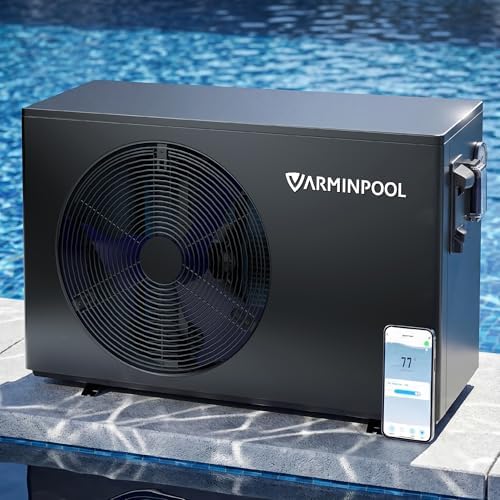
3 options shown here, $539 to $1261.99, each with its own full review behind its name.


How do I find the Operating Voltage for my home?
Operating Voltage for your home is typically found on the metal faceplate of your electrical breaker panel or by looking at the labels on your existing large appliances. Most standard wall outlets in North America provide 120V, while heavy-duty appliances like clothes dryers or ovens often run on 220V or 240V.
If you are considering a specific electric model, see our full Crosswind 40i spec breakdown for detailed technical data.
Checking appliance nameplates to identify available outdoor circuit voltage
You can confirm your available voltage by checking the nameplate on a large appliance already connected to a dedicated circuit. If the appliance states 240V, that circuit is compatible with higher voltage pool warming systems. If you are unsure, a qualified electrician can identify the voltage available at your specific outdoor connection point.
Verifying circuit amperage capacity for high-output pool warming systems
Before ordering, you must verify that your circuit can handle the specific amperage required by the heater. While the voltage must match exactly, the amperage is a measure of the flow of electricity, and a 120V circuit may not have enough capacity to power a high-output unit even if the voltage is correct. A professional installer can confirm if your current breaker size is sufficient for the specific heating capacity you intend to install.
For high-efficiency inverter options, look at our full ECOPOOLTECH EE100 review to see how it handles high-demand heating.
What happens if I choose the wrong Operating Voltage?
Operating Voltage mismatches result in immediate electrical failure or hardware damage because the heater receives either too much or too little electrical pressure. If you connect a 120V above ground pool heater to a 240V circuit, the excess pressure will overwhelm the internal components, likely blowing the internal fuses or melting the wiring instantly.
Risks of connecting 240V pool heaters to 120V electrical circuits
Connecting a 240V heater to a 120V circuit results in a failure to start or a significantly reduced output. In this scenario, the heater may hum but fail to engage the compressor or heating elements because the voltage is insufficient to overcome the initial resistance of the motor. This mismatch can lead to the unit running constantly without reaching the target temperature, which risks burning out the motor over time.
Research the KSPF-005L3R1A1 Heat Pump performance to see if its 16000BTU output meets your specific heating requirements.
The cost of these mistakes often involves replacing fried internal circuitry or, in some cases, damage to the home’s electrical panel. Because these units are heavy and involve high-voltage electricity, a mismatch is not a setting you can adjust; it is a fundamental incompatibility that prevents the pool warming system from operating.
What should I do if my home voltage is between two values?
If your home voltage sits in a borderline range, you must choose the system that matches your specific circuit’s rated output exactly. For example, if your home provides a 115V supply, you should select a heater rated for 110V to 120V, as these are designed to operate within that standard range.
You can view our full XKP2207BP Pool Heater review to see if this 30,000 BTU unit fits your electrical setup.
Matching pool heater voltage to specific home breaker ratings
In cases where a buyer is unsure because their home provides a variable range, the safest path is to consult the electrical capacity of the breaker. If the breaker is rated for 120V, you must select a 120V system; if it is a 240V breaker, you must select a 240V system. You cannot “bridge” these two types of electricity with a simple adapter or plug.
Options for resolving electrical capacity conflicts for pool heaters
When requirements conflict, such as wanting a high-capacity heater that requires 240V but only having 120V available, you must either upgrade your home’s electrical infrastructure or select a lower-capacity heater that matches your existing 120V supply. Attempting to use a transformer to step up 120V to 240V for a pool heater is generally not feasible due to the extreme power demands of the equipment. A qualified electrician must determine if your current electrical panel can support the additional load before you commit to a specific voltage requirement.
The other pool warming system guides we have published
- The Above Ground Pool Heat Pumps That Work Best for Large Pools
- Which Pool Heater with Wifi App Control is Best?
- Best Above Ground Pool Warmers for Backyards
- Keeping Your Backyard Pool Warm in Fall With an Above Ground Pool Heater
- Which Above Ground Pool Heater Keeps Water Warm at Night?
- The Above Ground Pool Heaters That Make a Small Pool Usable in Cold Weather